![]() |
| Ed Kenney at his Kaimuki restaurant Town |
By Christine Thomas
![]() |
| Ed Kenney at his Kaimuki restaurant Town |
![]() |
| Chocolate-caramel ganache cake by Waimea’s Kooky Cakes |
It’s another end of summer sale, this time an opportunity for you to save 40% on every UH Press title in inventory. The sale runs from Sept 1-7, and all you need to do is visit their website and order.
I recommend checking out the Hart Wood book about architectural regionalism in Hawai’i, The Value of Hawai’i, a collection of voices pondering Hawai’i’s past and future, which has been featured regularly on the new “newspaper” in town, Civil Beat, and classics such as Kuykendall’s three volume series The Hawaiian Kingdom and Billy Bergin’s Loyal to the Land.
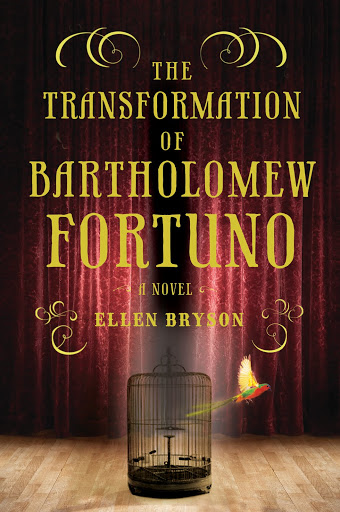
We’re transported to the Gilded Age in this debut novel about circus curiosities.Today, no ticket is necessary to gawk at the freakiest aspects of modern humanity; a quick Internet search delivers them in seconds. But in 1865, morbid curiosity was assuaged at such places as P.T. Barnum’s pre-circus American Museum in New York City. There the larger-than-life showman paraded odd objects and such human curiosities as Bartholomew Fortuno, the World’s Thinnest Man and fictional narrator of Ellen Bryson’s promising debut novel.
After a slow beginning tripped up by cumbersome, overwritten prose, The Transformation finds firm legs in Fortuno’s entrancing voice and the atmospheric reimagining of Barnum’s museum. The story opens on the eve of President Lincoln’s funeral, 10 years after Barnum rescued Fortuno from the circus. Artfully inserted historical details — from sewer smells to the reading of the latest Dickens’ installment in Harper’s — make the period tangible.
When Fortuno spies Barnum with a veiled woman, he is threatened and intrigued by what can only be a new act. Then the famously smiling Barnum asks Fortuno to spy on the newcomer, Iell, the Bearded Lady. The ensuing entanglement upends his routine, the curiosities’ hierarchy and eventually his identity.
On the surface, Fortuno is the consummate gentleman, forever respectful of his best friend and opposite Matina, the Fat Lady. He’s a loyal employee and a passionate performer who believes his act provides an important service to audiences. “[O]ur destiny insists we use our gifts to show others who they really are or show them what, in an ideal world, they could become,” he opines. “It may shock them at first, but, deep down, we open their eyes to greater possibilities.”
But, as Fortuno admits, some visitors stare in awe and others in disgust, so perhaps some readers won’t delight in sticking close to tall, thin Fortuno, whose deeper psychology can be as grating as his physique. Until Iell enters the scene, Fortuno is a naive shut in whose delusional arrogance helps him rationalize his refusal to leave the museum: “Normal people needed the context of my show to understand my place in the world, and I needed the distance from normal people. Idiots, every one.”
But when Barnum and Iell force Fortuno to connect with the outside world, his reality expands, and being swathed inside his point of view becomes less limiting. Amid this broader world still rich with magic, Bryson plucks readers’ curiosities to probe timeless questions: What happens when we suppress our appetites? What do we sacrifice to belong? What is lost when we hide?
Uncovering Iell’s secrets leads Fortuno to expose his own, and this subtle but profound transformation casts a spell over the narrative until the last pages. Novel and character are awakened by the magnetic Iell, who makes Fortuno feel “empty and full at the same time. Hungry and satiated.” By the end of the novel, readers should feel that way, too.
Science journalist deftly brings to life the periodic table of elements.
Imagine you’re taking a course encompassing the history of the world, madness, love, politics, rivalry and alchemy as seen through the periodic table of elements. Unless you’re a straight-A science geek, you’ll want a teacher who enlivens even the most tedious subjects by relating material to everyday life in everyday language and who exhumes juicy backstories about experiments and the people performing them.
Science Magazine reporter Sam Kean is that sort of teacher, and his new book is precisely this sort of wild but approachable course, with undeniably sharp science teeth.
The book tethers tales of carbon, silicon and the like to set themes and genres yet its information-packed chapters are infused with a sometimes directionless ebullience. Kean, who graduated with honors in physics, maintains “there’s a funny, or odd, or chilling tale attached to every element on the periodic table,” which he sees as “both a scientific accomplishment and a storybook.”
He jumps gleefully from one story to the next, confident in exactly how all the details fit. His writing is easy to follow when the stories are woven with intriguing characters and moments in history, such as Marie Curie and her scandalous reputation or the origins of chemical warfare. He’s also adept at providing fun facts such as what causes the eponymous spoon’s disappearance. His conversational prose sizzles with pop culture references to such items as iPods and Pepto Bismol, and he provides surprisingly informal analogies, such as calling the castle-like periodic table “a gigantic and fully sanctioned cheat sheet” and likening atom-molecule collision to “two obese animals trying to have sex.”
Elements are also daringly personified, from Kean’s beloved “cultish” and “alluring” mercury, which also helped archaeologists track down Lewis and Clark’s campsites, to independent and erotic helium, aloof gases, and that “black sheep” germanium. In these moments, Kean’s is the one class you can’t wait to show up for.
But the book isn’t entirely breezy and fun, particularly when the science gets more complex and the explanations more detailed and lengthy. Kean works to dissect intricate physics and chemistry, such as quantum mechanics or radioactive decay, into layman’s terms, but these sections produce the unpleasant sensation of cramming an entire semester course in one sitting (while fully expecting to fail). Fellow science geeks need not worry, but lest others be tempted to skip these details, plan on digesting Kean’s ode to the periodic table over time. Indeed, a semester might be an ideal schedule.
The detection of elements and their relevance in our lives is far from dead: the most recently discovered, copernicium, was added to the table in 2009, and europium is a modern anticounterfeiting tool. Kean’s palpable enthusiasm and the thrill of knowledge and invention the book imparts can infect even the most right-brained reader.
Ah….. Time for a period of dedicated travel (finally!). While I replenish and restore (and do a little travel writing and research) over the next month Literary Lotus will be on break.
Circle back ’round at the end of August for book reviews, author interviews, and new events, spots, and news from Oahu, the Big Island, Fiji, and more.
In the meantime, if you want to read what I’m reading, pick up:
A Visit from the Goon Squad by Jennifer Egan
For all her protestations of outside influence, Cardella’s root issue is psychological, not social. She used clothing to shape and reformat herself, creating a polished exterior designed to ward off self-doubt and insulate herself from grief at her mother’s death. Her fragile self-esteem funneled her right into “the lacquer of the good life,” and she liked this society-approved “external artifice” better than her own self and sense of style.As I plan an upcoming work/play excursion to Fiji later this month (expect LL to be on hiatus during this time), I keep popping over to Fiji Guide.com to check in with people I met on a press trip there last year and search for helpful information for my stay. I’ll also be writing about my trip for Fiji Guide, filing stories on location when possible.
On recent site visit, I read a post by publicist and Fiji Guide founder Rob Kay about the very interesting surfing development in the island nation. Fijian resorts now no longer have exclusive access to “it” surf spots such as Tavarua. Tourism experts estimate this change could bring more than 20,000 surfing tourists to the nation per year. Keep in mind that in 2008, Fiji had just over 585,000 visitors.
Is this good or bad for surfers and surfing? Will this make Fiji less or more desirable as a surfing destination? You tell me.
Collection explores relationships — romantic, erotic and miserable.At times the best way to communicate the struggle of humanity is simply to write it down; even in today’s instant messaging, friended Twitter-verse, the old-fashioned letter still serves a much-needed purpose.
The prolific Ben Greenman, a New Yorker editor and Palmetto High school graduate, investigates the interplay of the why, what and how of such communication in his epistolary collection. The 14 stories in this slim but substantial volume — the length has more than doubled since its first incarnation as the six-story, limited edition letterpress box Correspondences — are set in a range of locales (from Paris to Harlem to the moon) and eras (from 1851 to present).
A few stories unfold during the Internet age, when Greenman’s characters must sidestep modern communication’s brevity and instantaneousness. They usually do so artfully, save for the narrator in the perplexing yet intriguing Seventeen Different Ways to Get a Load of That, set on a U.S. moon settlement in 1989. He shuns technology and stubbornly clings to letters, what everyone else views as “an antiquated practice.”
Letters are integral parts of the plots and messages. Some impart news, such as the erotic missive to an ex-wife in Country Life is the Only Life Worth Living, pulsing with the narrator’s boundless appetites, while others are considered “particularly efficient delivery mechanism[s] for additional misery.” Some letters are conduits for the blossoming or wilting of love, like the words written by the man in the title vignette who separates from his wife via postcard or in the effortlessly unfurling To Kill the Pink, where deeper connection between two lovers rests on a short note. And some are never meant to be perused, like the more than 2,000 over-the-top romantic love letters Tomas Tinta writes in Hope to a woman he met once.
Throughout, a limber Greenman, author of the rock and roll novel Please Step Back, plays confidently in his customary milieu of human and romantic relationships, inhabiting rapacious male and devious female narrators (as well as quite a few observant painters and lawyers) with practiced ease. Yet his stories are at once weighty and genuine and light and breezy, as he subtly nudges hefty themes of permanence and transience, meaning, isolation and connection. Intensifying mystery and rescuing the collection from a formulaic devotion to letter writing are the intimate yet diaphanous connections the stories share, perhaps a word repeating in two parallel stories or the uncertain sense that characters repeat.
What rises to the surface is that What He’s Poised to Do isn’t just about communication, but what drives it — man’s eternal dilemma, articulated slyly in Against Samantha: “[I]t is every story, told all the time, in every language, with every available flourish. Man is asphyxiated by choice, not in the abstract but in the concrete. It hardens around him.”
Sometimes choices can’t be communicated and shouldn’t be received quickly. Because, like Greenman’s earnest, troubled and deeply human characters, sometimes we need more time to ponder what to do next.
Read more at the Miami Herald
Photo by Dorothy Hong
Purchase directly from W. W. Norton at a 20% discount with this special promotion code before July 31, 2010: SUMMER10
We can all use a little 20% off love these days, so thanks W.W.