If you read Mediabistro’s Galley Cat, you may have seen this, but I couldn’t resist passing it along. Cheryl Kline, a children’s book editor at Scholastic’s Arthur A. Levine Books division was inspired to write her own literary lyrics to Sir Mix-a-Lot’s “Baby Got Back.”
It will make you laugh, much needed in this busy season. I wish I had the time and the talent to write such an amusing bit.
Cheers to Cheryl and her blog, Brooklyn Arden.
Just a teasing excerpt:
“[Sir Reads-a-Lot]
I like big books and I can not lie
You other brothers can’t deny
That when a girl walks in with an big fat book
And glasses on her face
You’re all thrilled, wanna talk to her quick
Cause you notice she’s reading Dickens
Deep in the tote she’s carrying
I’m hooked and I can’t stop staring…”Find the entire ‘song’ here.
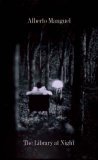
A bit ago I wrote about libraries as they’ve impacted my life through the years, and gave you a sneak peek at Alberto Manguel’s new book The Library at Night. I reviewed it for two publications, and one review appeared yesterday in the Miami Herald.
See the full text of the review below, and see it online here.
BY CHRISTINE THOMAS
THE LIBRARY AT NIGHT.
Alberto Manguel, Yale. 373 pages. $27.50.Published April 27, 2008 in the Miami Herald
Alberto Manguel’s new book is a vivaciously erudite justification for society’s inexorable efforts to collect, order and store information. Inspired by the library he built in his French home, he explores the myriad levels on which a library functions and how readers interact with and in them.
The book is divided into 15 categories, each chapter exploring the library in a different light — as myth, survival, power, etc. Manguel revisits childhood bookshelves as well as libraries in ancient Egypt, Greece, Arab countries (including the legendary Library of Alexandria) and the personal book collections of Charles Dickens and Manguel’s fellow Argentine Jorge Luis Borges (himself a librarian). The route is above all determined by Manguel’s extensive knowledge and experience.
And there seems to be no one more qualified than the renowned anthologist, translator, essayist, novelist, editor and author of A History of Reading, to act as guide on this engrossing tour, digging through evidence of libraries’ existences, fates and importance from our earliest history to concrete and theoretical intersections with contemporary life. Manguel is comfortably present throughout by way of candid opinions and often humorous observations, particularly in descriptions of the minutia of a reading life: ”Immensely generous, my books make no demands on me but offer all kind of illuminations — [they] know infinitely more than I do, and I’m grateful that they even tolerate my presence.” Illustrations and photos are consistently placed throughout the book, rounding out the journey and imparting a sense that we’re accompanying Manguel to the libraries about which he writes.
Such structured yet fluid sections provide ample opportunity to present an extensive swath of information, and Manguel incorporates so much it’s impossible to mention every significant connection (Dewey, Hitler’s library, Google’s book project, warnings of technology’s failings). Superb transitions link each division, and standout passages abound, including one exploration of reading as survival and the struggle to preserve freedom of thought and expression. Another fine note is the reminder that the Anglo-American army simply watched as Baghdad’s National Archives, Archaeological Museum and National Library were looted in April 2003.
But this wealth of research and reflection means that while some chapters, such as ”Library as Shape”, seem solid, full and contained, others, such as ”Library as Chance” read like a catchall for extraneous detail. ”Library as Island” appears tangential and disconnected, roving from the Bible to the Web to bookmobile ungulates and back. Other chapters are more effectively populated with many small stories and examples throughout time and across countries, while another entry, ”Library as Mind,” is compelling and convincing by centering solely on Aby Warburg’s personal history and maddeningly unique library organization.
Unfailingly, Manguel’s book underscores the viability and sustainability of reading, writing and ideas and the sheer impracticality of dismissing books and libraries as obsolete relics. Book lovers will luxuriate in these earnest and impressively researched pages.
For you, a preview of a new book coming out next week (on sale April 29), a charming memoir, social history, and fashion tour through the generations. Elizabeth Kendall’s Autobiography of a Wardrobe is also smartly written, clever, and explores a subtle emotional trajectory that adds depth to what could be a simply material pursuit.
Take a peek:
“B. sat on the floor in a dark classroom with the other grad students. It was Sensitivity Training. The teacher told them to close their eyes and imagine in their hands, a book. The book was their own autobiography and they should start to read it.
“B. gripped the book tightly, took a breath, opened her eyes, and began to read–about something she had no idea she remembered. It was herself, when small, climbing out of the lower bunk in the early morning, crossing the room to a white dresser, opening a bottom drawer to find a pile of small red corduroy overalls that smelled clean. She took one off the top of the pile.
“There was I, present in her deepest of memories. I am B.’s wardrobe, her ever-evolving second skin. She is My inhabitant, My Body–My B.”
–Elizabeth Kendall, Autobiography of a Wardrobe
Look out for my piece on the book coming out next week in Lei Chic.
What I’m Reading | Kaui Hart Hemmings
Author
Q&A with Christine Thomas
April 20, 2008
Honolulu Advertiser
–What are you reading?
I just finished “Revolutionary Road” by Richard Yates. It’s a novel set in the ‘60s and it’s just about a young couple who live in the Connecticut suburbs who think they’re superior to the suburban life they’ve found themselves in. They have these contentious knockdown fights and decide to move to Paris, and of course their plans get thwarted and then everything goes in this downward spiral. It’s exactly the kind of novel I like—intimate, focused on a small group of people in a very specific time and place, just about people’s relationships but yet it’s not by any means like a quiet domestic novel.
There’s so much tension and suspense, too. And I just love Richard Yates.
–How did you discover it?
It came out a while ago, and my publisher Random House just started this film division so they’re starting to read books for adaptations and this one was the first pick to adapt into a movie. It’s a classic book I’m also embarrassed I haven’t read yet.
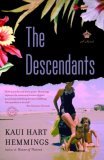
–Do you read novels while you’re writing, such as your most recent book “The Descendants” which just came out in paperback?
I’m always reading. I usually have about two to three novels around that I’m always looking through, and I know when I’m writing that something is seeping into it. Whatever I’m reading at the time, stylistically it has the tiniest bit of influence. But I like it because where I get my inspiration is reading other people’s work, maybe because I want to answer back in some way.
–How is Yates seeping what you’re working on now?
I never really know at the time what it’s doing, but I am working on something that has nothing to do with the plot but it is focused on a small group of people with not necessarily these huge problems but these minor tensions between one another. I love the way in his novel they sort of moved completely into something huge at the end. It wasn’t just about relationships— something happens in the novel, which I’m very big on. I don’t like just a lot of internal reflection. So reading his novel reminds me to keep that tension as if it’s a suspense novel, even though it’s not at all—to have something happen.

Down to Earth
April 22, 2008
Published in Lei Chic
By Christine Thomas
10 ways to green-up your life on Earth Day (and every day) – the day we remember we’re not the only ones living on an island – our planet is one, too.
1 – Bottled Water Be Gone
700 years. That’s a plastic water bottle’s landfill life. Add the energy used to ship it to our islands – home to some of the world’s best tasting, cleanest, non-fluoridated tap water – and it’s a no-brainer to switch to Sigg Reusable Water bottles, made from sturdy aluminum with a non-leaching plastic liner (unlike No. 7 Nalgenes), in 144 colors and designs. Available at Red Pineapple in Ward Center , 808.593.2733
2 – Do It Yourself
You want to compost, use water catchment, naturally control pests, and make your own natural cleansers, but don’t know how? The Green House will teach you how in one lazy Saturday afternoon. Call 808.524.8427 or email <!– var prefix = 'ma' + 'il' + 'to'; var path = 'hr' + 'ef' + '='; var addy61890 = 'thehawaiigreenhouse' + '@'; addy61890 = addy61890 + 'hawaiiantel' + '.' + 'net'; var addy_text61890 = 'thehawaiigreenhouse' + '@' + 'hawaiiantel' + '.' + 'net'; document.write( '‘ ); document.write( addy_text61890 ); document.write( ” ); //–>\n thehawaiigreenhouse@hawaiiantel.net <!– document.write( '‘ ); //–> This e-mail address is being protected from spam bots, you need JavaScript enabled to view it <!– document.write( '’ ); //–> for current course schedule.
3 – Grow a Native Forest
Donate your tax refund to The Tree Center Hawai‘i, a nonprofit group restoring native dryland forest with endangered trees like Wili wili and Hawaiian Hibiscus, in Kona’s Kaloko-Honokohau National Historic Park. The Tree Center Hawai‘i, 808.333.0330.
4 – Save O‘ahu
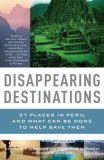
In the new book Disappearing Destinations: 37 Places in Peril and What Can Be Done to Help Save Them,two journalists and environmentalists detail 37 travel destinations we assume will always be there but are in fact alarmingly fragile. Among them: O‘ahu. Discover how we can prevent Kailua Bay from suffering Lanikai’s fate, and more, online at amazon.com and at local booksellers.
5 – Sack it Up
Bust out your Envirosax, (or any reusable bag) to carry your groceries, Costco supplies, takeout food, Long’s purchase…and look super stylish when you do.
6 – Kick it to the Curb
Hawai‘i is still lagging on statewide curbside recycling, so until you get your new green bin have O‘ahu Community Recycling come to your house and whisk your reusables away.
7 – Drink Up
Mark your calendar: Green Drinks at E&O Trading, 5 p.m. Tuesday May 6 – join the global trend of networking with other professionals and people passionate about living green. Ward Center , 808.591.9555. More info here.
8 – Eat Local
Reduce fossil fuels by eating local as often as possible. FarmFreshHawaii.com and Just Add Water veggie delivery services bring you the freshest, “greenest” local produce (not like supermarket stuff that’s been in crates for weeks before arrival). Of course Farmer’s Markets work, too.
9 – Wear Green Sleeves
With sustainable fabric (like organic cotton, bamboo and recycled water bottle polyester) tees, hoodies and other casual wear, Big Island clothiers The Organik’s high environmental standards make them our eco-fashion pick.
10 – Move It
Moving closer to work to cut back on driving? Malama Moving Company will help you move in a green flash, without using “virgin” materials, adding nothing to the landfill, saving you money, and even using a bio-diesel powered truck.
Back from a recent mainland visit, I found on my desk a copy of Disappearing Destinations: 37 Places in Peril and What Can Be Done to Help Save Them, a new book out from Vintage, by Kimberly Lisagor and Heather Hansen, two journalists, travelers and environmentalists (so says the jacket).
Among the discussed fragile places that may vanish without attention are the Florida Everglades, California’s Napa Valley, Tanzania’s Mount Kilimanjaro, and our own O`ahu, Hawai`i. Surprised? Development and an arguable preference given to landowners instead of environment has led to seawalls that encourage disappearing beaches, as well as vanishing sand dunes. The small chapter focuses mainly on Kailua Bay, and how it might be possible to save it from Lanikai’s fate.
I thought this an unusual choice given that many other places on O`ahu (the North Shore comes to mind) might well be on the verge of ‘disappearing’, but, overall the book seems an important documentation of the large-scale changes occurring in the world, which aren’t too late to alter with courageous investment and preparation for climate change to prevent further losses.
A love poem in Farsi (and English) for you to ponder this weekend, in honor of poetry month.
In the dimness of night, my troubles fade away
As I hold my beloved in my arms
I yearn for the gaze of her eye
As it hears the voice of my silence
Oh for the moment your head rests against my shoulder
As the bud of a gentle flower
I quench my desire and thirst
As your lips are the wine on my own
My heart expands with joy
As I wear your ring of love
I plead with the sun not to rise
As I am holding the moon in my embrace
–M. Tajbaksh
The final (and best!) April event is the launch of Bamboo Ridge issue #91 on April 30 @ 7pm at the UH Manoa Campus Center Ballroom.
Twelve featured authors, listed at right, include Peter Van Dyke, who won the editor’s choice award for Best Prose; Christine Thomas (yes, that’s me), awarded editor’s choice for Best New Writer; and Rachel Ana Brown, the choice for Best Poetry.
It’s the 30th year of Bamboo Ridge’s service to local writers and stories, and this reading is free and open to the public. So come down!
If for some odd reason you miss it, check out the second reading and reception at Native Books/ Na Mea Hawaii May 9 at 6.30 p.m. I’ll remind you, too.
If you’re not in LA at the end of the month, check out the Honolulu Academy of Arts first annual Art in a Thousand Words or Less, Sunday April 27 at 2 p.m at the Doris Duke Theatre.
Launched by Academy film curator Gina Caruso, the event features seven writers, most of them local, reading their shorter fiction and poetry (between 700-1000 words) inspired from a work of art housed in the Academy. Caruso wants the Doris Duke Theatre to be a venue for writers too, calling it “a form of art” that is also very visual.
Participants in Art in a Thousand Words or Less are Peter Britos, Marie Carvalho, Chi-Wai Au, Lee Cataluna, Kathleen Norris, Mary Lou Sanelli, and Susan M. Schultz.
Your $8 admission to Art in a Thousand Words or Less includes a booklet featuring the writers’ poems and short fiction, and an image of the work that inspired them. Advance releases tells us that Lee Cataluna wrote about Antoine Bourdelle’s statue La Grand Penelope, which resides in the Academy’s Central Court.