Now I get to ask:
What are you reading?
Eat the lotus @ literarylotus.com
Categories: Uncategorized
Now I get to ask:
What are you reading?
Recently I looked back over 2008 and chose the most memorable titles I read and reviewed throughout the year (a short list was published 12.28.08 in the Advertiser). Of course many will be familiar to LL readers, but they also might be the perfect answer to your burning question: what should I get with my amazon gift card?
Atmospheric Disturbances
By Rivka Galchen
FSG; 256 pages; $24In this striking debut, psychiatrist Leo Liebenstein discovers his beloved wife Rema has been replaced by a cunning simulacrum, leading him to join forces with a former patient convinced he’s conducting secret meteorology experiments, and travel throughout Argentina searching for his lost wife. Galchen’s formidable family background and professional experience is the spine of this hauntingly seductive story questioning the complex and often obfuscated bounds of reality, science and love.
The Painter from Shanghai
By Jennifer Cody Epstein
W.W. Norton; 416 pages; $14.95What is known about the life of 20th Century Shanghai painter Pan Yuliang seems the stuff of fiction, so it’s unsurprising that the plot of Epstein’s debut novel about Yuliang’s life is utterly engrossing. The book’s spellbinding intimacy is rooted not in the romance of this courtesan era but Epstein’s true achievement in resurrecting such a passionate woman who pursued a life of her own despite intrinsic barriers.
Salmonella Men on Planet Porno
By Yasutaka Tsutsui; translated by Andrew Driver
Pantheon; 252 pages; $21.95The title of popular Japanese author Yasutaka Tsutsui’s short-fiction collection presents an irresistible temptation to skip to the final, title story and seek out the scandal. The entire collection unabashedly romps in the sexual facets of modern humanity and culture, but these stories do so much more, sometimes brilliantly, often hilariously, always fantastically, never bound by reality or convention. This collection is not for the faint of heart; instead you must be open and truly progressive to receive its infinite joys.
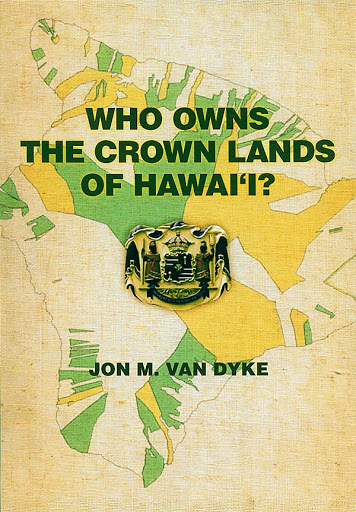
Who Owns the Crown Lands of Hawai’i?
By Jon M. Van Dyke
UH Press; 485 pages; $28In support of his assertion that the “Crown Lands should once again be managed by and for the Native Hawaiian People,” Van Dyke details their intricate history and legal status, laying a remarkably clear and completely captivating path of understanding. He effortlessly navigates such complex intersections as Hawaiian concepts of land tenure and smartly steers past such disputes as the role of ali`i in a new Hawaiian Nation to pointedly elucidate and persuasively affirm the Crown Lands’ unique status so they can be more effectively restored to their intended purpose and beneficiaries.
Ghost Train to the Eastern Star: On the Tracks of the Great Railway Bazaar
By Paul Theroux
Houghton Mifflin; 496 pages; $28Thirty-three years ago, Paul Theroux undertook an ambitious 28,000-mile train journey across Asia and wrote about it in “The Great Railway Bazaar.” Then in 2006, he embarked on the same journey to discover what had changed. Though Theroux may feel older and act tamer, and the journey covers the same geography, this story is as fresh as a brand-new adventure. And because he is at home in the world, reading “Ghost Train” makes you feel that way, too.
The Global Game: Writers on Soccer (Bison Original)
Edited by John Turnbull, Thom Saterlee, Alon Raab
Bison Books; 296 pages; $19.95The world’s most popular sport has inspired literature across the globe, just not often in English. To educate and enlighten us, Turnbull and his fellow editors collected and translated more than 50 pieces of poetry and prose from such masters as Eduardo Galeano, Ted Hughes, Elvis Costello and Mario Vargas Llosa, alighting in such diverse locales as Kosovo, Montana, Iran, and Greenland. These missives offer an uninterrupted view into the unexpected myriad ways soccer and the human experience connect.
What Shamu Taught Me About Life, Love, and Marriage: Lessons for People from Animals and Their Trainers
By Amy Sutherland
Random House; 168 pages; $12While researching an article on exotic animal trainers, journalist Amy Sutherland started using their targeted techniques to transform her husband into a more live-with-able cage mate, a life-altering experience detailed in her new book, an expansion of her hit 2006 New York Times article. The results of her experiment were so remarkable, at first Sutherland didn’t realize she was also training herself—to be more patient and accepting, of everyone. The anti-self help book, “Shamu” is a fresh, candid story about changing our outlook for the better.
Shining City
By Seth Greenland
Bloomsbury; 307 pages; $15After losing his factory job to China, middle-aged everyman Marcus Ripps, the protagonist of Greenland’s hilarious satirical novel, faces defaulting on his L.A. home and living a sexless marriage, until his estranged brother bequeaths him an eponymous dry cleaning business. This solution is quickly soiled when he learns the only thing being laundered there is money earned by a suite of prostitutes. So, what to do but rationally consider the irrational—becoming a pimp? It’s the perfect novel for a time when compromising ethics or forgoing survival just might be everyone’s dilemma.
The Library at Night
By Alberto Manguel
Yale; 373 pages; $17Alberto Manguel’s newest book is a vivaciously erudite justification for society’s inexorable efforts to collect, order and store information. Inspired by the library he built in his French home, he explores the myriad levels on which a library functions and how readers interact with and in them. It unfailingly underscores the viability and sustainability of reading, writing and ideas, and the sheer impracticality of dismissing books and libraries as obsolete relics.


By Eduardo Galeano
from The Book of Embraces
“The sun was gentle, the air clear, and the sky cloudless.
“Buried in the sand, the clay pot steamed. As they went from ocean to mouth, the shrimp passed through the hands of Fernando, master of ceremonies, who bathed them in a holy water of salt, onions, and garlic. There was good wine. Seated in a circle, we friends shared the wine and shrimp and the ocean that spread out free and luminous at our feet.
“As it took place, that happiness was already being remembered by our memory. It would never end, nor would we. For we are all mortal until the first kiss and the second glass, which is something everyone knows, no matter how small his or her knowledge.”

 Through a friend at the University of Hawai’i, I have learned of the passing late last week of Hawai’i author and UH writing professor Ian Macmillan. The loss of his distinctive contribution to literature and Hawai’i writers and readers will be felt throughout the islands, by many who knew him and learned from him.
Ian MacMillan was a veteran and prolific author of short fiction and novels, including a trilogy of World War II novels published by Viking-Penguin: Proud Monster, Orbit of Darkness, and Village of a Million Spirits—which won the 2000 Pen USA-West Award for Fiction; and three Hawai’i novels: Red Wind, The Braid, and Seven Orchids—which in 2007 won a Ka Palapala Po’okela honorable mention for Excellence in Literature.
His work appeared in more than 100 literary and commercial magazines. His stories were taught in local schools like the Punahou Academy, and were included in prize anthologies, winning him, as just a few examples, an O. Henry award, Pushcart Prize, and Best American Short Story Award.
He also generously contributed to the development of local writers through his steadfast commitment to teaching in the UH Manoa Creative Writing Program, where he influenced many now successful authors since 1966.
Ian MacMillan lived in Hawai’i for 40 years, earned his BA from the State University of New York, Oneonta in 1965 and in 1966 his MFA from the University of Iowa. Sadly his wife died just 20 days before him. He is survived by his daughters.
At the end of 2006, I interviewed Ian for my Advertiser column What I’m Reading. Here’s his full interview, again, in remembrance.
What I’m Reading | Ian MacMillan
Writer; Professor of Creative Writing, UH ManoaQ&A with Christine Thomas
December 2006Q. What are you reading?
A. I’m always halfway through a number of books. The one I’m reading now is part for interest and part for research: A.O. Bushnell’s “The Gift of Civilization: Germs and Genocide in Hawaii.” It’s probably the most important and best out-of-print book I know of. It’s about the diseases after Captain Cook. I bought this a little less than a year ago because of research I’m doing for a book I’m writing, but it’s fascinating in itself.
Another one is Kurt Vonnegut’s “Time Quake.” I try to read Vonnegut because he was my advisor at Iowa during graduate school. Another is called “The Bear Went Over the Mountian,” a satire by William Kotzwinkle. It’s a funny book.
Q. Which one most captures your imagination?
A. The Bushnell, just because the information is fascinating. Bushnell was a novelist and also a microbiologist, so he knew all about this situation of the effect of important microbes and imported germs on the population here. He explains all that and why it happened the way it did. You realize how important it is. He’s very accurate and the implications are still in place today.
Q. Is your new book related to today’s fight against foreign plants and animals?
A. It’s a historical novel set in Hawai`i. Bushnell’s book covers the time period I’m dealing with, the late eighteenth century.
Q. Do you read a lot when you’re working on something new, or just for research?
A. I don’t have any problem reading while I’m writing. What I read most is my creative writing students’ work. So switching from their writing to something I’m working on is no problem.
Q. Does what you read inform not only your new writing, but your advice to your students, a new crop of Hawai`i writers?
A. I just read to get a good story. What made me want to read Bushnell was the information; then I realized how important it was when I started reading.

Ah…love.
The Secret Papers of Madame Olivetti
By Annie Vanderbilt
NAL; 275 pages; $14The first pages of Vanderbilt’s novel bring blood to the cheeks, as the protagonist Lily Crisp (great name!) finds love in bed with her new French neighbor. But this novel is more than a widow’s rediscovery of love and independence in a new country, but a delightful exploration of a past and present full of secret love and betrayal, loss and regret, all divulged to a beloved typewriter.
The Sealed Letter
By Emma Donoghue
Harcourt; 416 pages; $26Fact and fiction merge in Donoghue’s novel as British spinster and women’s movement pioneer Emily “Fido” Faithfull puts her cause at risk by helping her friend through a scandalous affair with an army officer. Based on real newspaper coverage from 1864 England about a Clinton-esque courtroom drama with adulturous accusations, stained clothing, and of course a mysterious letter, Donoghue’s story is wholly her own, an undressing of prim and proper Britian and an enjoyable romp through a provocative and famous divorce saga.
Casanova: Actor Lover Priest Spy
By Ian Kelly
Penguin; 403 pages; $28.95In his newest book, Ian Kelly broadens our perception of the greatest lover of all time by documenting the life of Giacomo Casanova, a writer (he translated the Iliad for one), adventurer (visited every European capital), businessman, diplomat, spy and philosopher. Friend and lover accounts and unpublished papers provide backdrops for new insights on how his charisma led to infamy, and Kelly’s construction of Casanova’s life as dramatic play rivets attention to each page until the last curtain call.
Tamara Drewe
By Posy Simmonds
Mariner; 136 pages; $16.95A graphic novel by Britain’s loved cartoonist, Tamara Drewe’s format takes some getting used to, but Simmond’s finely crafted drawings, ear for dialogue and racy, breezy plot suck you right in. Inspired by a work of Thomas Hardy, this novel is set at a writer’s retreat, near where the ambitious protagonist Tamara works as a gossip columnist and watches every man fall at her feet. As the town and characters unfold, one can’t help but be seduced by its reality show similarities, and the book’s distinctly original charm.

For hearts that never grow old:
The Hawaii Snowman
Written by Christine Le; Illustrated by Michel Le
Mutual; 35 pagesA snowman gets his wish to travel to Hawai’i and learns not only the meaning of melt (explained by the sea), but of love and Christmas in this strikingly vivid and magically illustrated book.
Naupaka
Written by Nona Beamer; Illustrated by Caren Ke’ala Loebel-Fried
Bishop Museum Press;The legend of the naupaka blossom comes alive in this tale by Aunty Nona Beamer and rich block prints of Loebel-Fried, not one of horticulture but a love that could not be in life, but is forever remembered.
Banana Heart Summer
by Merlinda Bobis
Delta; 257 pages
Spirited twelve-year-old Nenita will make you eat the heart of the matter, too, in Bobis’ romantic, ingenuous novel, as she searches for love, life and opportunity in food, friends, her Nana’s stories, and more food. An unintended Filipino companion to “Like Water for Chocolate.”
Hawaiian Family Album
By Matthew Kaopio
Mutual; 47 pages; $13.95Mouth-brush artist and writer Matthew Kaopio’s endearing new book centers on eleven brief family stories told to him by his grandmother during bouts of clarity allowed by Alzheimer’s.
The effect is like sitting down with one’s own kupuna, soaking up stories once forbidden, while charming family photos anchor the cast of characters, moments of un-translated Hawaiian dialogue truly evoke the past, and throughout, Kaopio’s paintings entice you to linger in his rich, animated world.

For the Ladies in your life:
Scrapbooks: An American History
By Jessica Helfand
Yale; 190 pages; $45This visually stunning coffee-table sized book, comprised of 475 color illustrations and photographs, elevates what is today seen as a frivolous women’s craft hobby to the invaluable historical documents scrapbooks are and will become. Noted graphic designer Helfand unearths 100 years of scrapbooking by both men and women–including books by Zelda Fitzgerald and Anne Sexton–placing quirky and highly individual expressions in a series so that readers can see a new historical angle and fresh perspective of American before the modern age. At the same time, the book provides a beautiful way to experience the voyeuristic joy of peering into private diaries of the past.
The Painter from Shanghai
By Jennifer Cody Epstein
W.W. Norton; 416 pages; $14.95What is known about the life of 20th Century Shanghai painter Pan Yuliang seems the stuff of fiction, so it’s unsurprising that the plot of Epstein’s debut novel about Yuliang’s life is utterly engrossing. The book’s spellbinding intimacy is rooted not in the romance of this courtesan era but Epstein’s true achievement in resurrecting such a passionate woman who pursued a life of her own despite intrinsic barriers.
What Shamu Taught Me About Life, Love, and Marriage: Lessons for People from Animals and Their Trainers
By Amy Sutherland
Random House; 168 pages; $12While researching an article on exotic animal trainers, journalist Amy Sutherland started using their targeted techniques to transform her husband into a more live-with-able cage mate, a life-altering experience detailed in her new book (an expansion of her hit 2006 New York Times article). The results of her experiment were so remarkable, at first Sutherland didn’t realize she was also training herself—to be more patient and accepting, of everyone. The anti-self help book, “Shamu” is a fresh, candid story about changing our outlook for the better.
What Rhymes with Bastard?
By Linda Robertson
MacAdam/Cage; 251 pages; $24In her new memoir “What Rhymes with Bastard?,” Robertson not only writes songs about her crazy, sex-obsessed, drunk, sweet, mean, and unforgettable husband Jack (like an entertaining ditty about the discomforts of outdoor sex) and life after moving from England to San Francisco (like one about their pervert landlord), but also brutally and hilariously details all that women learn about men during their first real relationship. Far from standard chick-lit and never a victim’s account of a dysfunctional marriage and sex life, this book is a brave, unvarnished, sometimes repulsive and often moving tale of how her own voice and independence (along with winning accordion playing) sprung from the humor and sadness of a decaying relationship.
The Fidelity Files
By Jessica Brody
St. Martin’s; 422 pages; $13.95In Brody’s debut novel, beautiful but chronically single Jennifer Hunter secretly becomes Ashlyn, a fidelity inspector battling cheating men who all look alike on the inside—unfaithful. As Ashlyn morphs into each man’s fantasy, she tests them for the intention to cheat, ensuring that her client’s mate does all the propositioning until it’s clear he would’ve had sex with her, escaping before things go all the way. The plot remains irresistible as a succession of men fail (frighteningly common) or pass (dumbfoundingly rare), and the titillating tension only increases as Jennifer struggles to keep her identity a secret. It’s one superpower every girl wants, and every girl needs.
Cancer Is a Bitch: (Or, I’d Rather Be Having a Midlife Crisis)
By Gail Konop Baker
Da Capo; 261 pages; $22Of all the things you sweat each day, none compare to what happened to Gail Konop Baker right before Valentine’s Day at age 46, when at a her annual mammogram she heard something every woman dreads: “I think we should biopsy.” Unflinchingly intimate, never whiney, often hilarious and always authentic, Gail’s memoir “Cancer is a Bitch” details her struggle with breast cancer and shows it to be frighteningly relevant to us all. But somehow, by revealing how she brought her life back into balance, she makes it seem less scary and a little more bearable. And your small stuff a lot less sweaty.
The Tsarina’s Daughter
By Carolly Erickson
St. Martin’s; 321 pages; $24.95The romance of the Romanov era pervades Carolly Erickson’s latest historical novel, centered on the evolution the life of Tania, daughter of Tsar Nicholas II and Tsarina Alexandra. Evoking her privileged world of splendor, courtship, and dancing lessons only to rip them away once war and revolution wax onward, Erickson’s entertaining novel is nonetheless a comfortable ride of suspense leading from and back to Tania’s safe new life in Saskatchewan in 1989. It’s perfect snowed-in (or rained-in) holiday escape.

These days the environment and politics are often inextricably twain, so this gift guide offers books for ‘greenies,’ some for ‘pundits’ and some in between.
You Are Here: Exposing the Vital Link Between What We Do and What That Does to Our Planet
by Thomas M. Kostigen
HarperOne; 256 pages; $25.95; October 2008Environmental writer Thomas Kostigen’s new book, You Are Here, is a crash course in the direct, often destructive results of our actions on the environment, for those that deny or simply haven’t let sink in the climate change narratives now living on our planet. The book explores and uncovers the dangerous and un-digestible reality of the Mumbai e-waste dumps, the medical waste and plastic trash dump that the Pacific has become, a town in Alaska that has been ordered to evacuate by 2015 due to ice melt, how worldwide demand for soy is hastening the Amazon destruction, and more. Once you’re convinced, you’ll have to go elsewhere for positive direction and action steps (like Break Through), but this book is the perfect jumpstart for the complacent and uninformed.
Your Eco-Friendly Home: Buying, Building, or Remodeling Green
by Sid Davis
Amacom; 230 pages; $17.95With clear and appropriately technical explanations, real estate agent and author Sid Davis’s new book is aimed to help people like you and me develop a personal action plan for energy savings and sustainable or at least responsible use of resources, while also presenting information that will help people buy, build or remodel ‘green.’ Tips and trap, easy-to-read bulleted lists and sidebard make this a practical home guide that can be picked up for quick reference, and applicable to people who don’t think themselves conservationist, but simply want to do things right.
The Superferry Chronicles: Hawaii’s Uprising Against Militarism, Commercialism, and the Desecration of the Earth
by Koohan Paik and Jerry Mander
Koa Books; 328 pages;Together with local and mainland environmental professionals, Hawaiian activist Haunanu Kay Trask, military observers and legal experts, filmmaker Paik and globalization think tank director Mander unpack the dramatic events surrounding the early launch of the Superferry interisland transport in 2007. Focusing on the Kaua’i harbor blockade, a month-by-month history of events in the development of the ferry, and insider reports about environmental questions, legal issues, and militarism in Hawai’i, the book supports its foundational theses–that the Superferry is a window into the intrigue and corruption amongst the military, commercial interests and Governor Lingle, and a time when Hawai’i citizens finally said Enough.
Food Fray: Inside the Controversy over Genetically Modified Food
By Lisa Weasel
Amacom; 234 pagesThough most American consumers have remained blissfully ignorant of the presence of genetically-modified foods on our shelves, behind the closed doors of scientists, farmers, policymakers, activists, and corporations like Monsanto a fierce debate is raging. Renowned scientist Weasel does a remarkable job of conjuring a vivid narrative that cuts through the hype to reveal why Zambia refused America’s GM foods during a 2002 famine, why Europeans don’t want anything to do with them, and why though Americans want to know what’s in their food, they don’t. Food Fray offers insight and information to help you see for yourself on which side of the debate you stand, and why opposition to GM foods is far from anti-science, and instead is 100 percent pro-human. Look out for my forthcoming full reviews of this book in the Miami Herald and Honolulu Advertiser.
Tuna: A Love Story
By Richard Ellis
Knopf; 319 pages; $26.95Just when you thought eating organic was your primary food dilemma, Richard Ellis’ new book “Tuna: A Love Story” inspires another: whether to eat fish at all. An encyclopedic documentary of the Thunnus thynnus, or Bluefin tuna, Ellis’ narrative explains all you wanted to know (and much you wished you didn’t) about these critically endangered “jet fighters of the sea,” much loved and eaten around the globe. Read more about this book here.
Dissent: Voices of Conscience
By Colonel (Ret.) Ann Wright and Susan Dixon
Koa Books; 278 pagesThis gutsy book tells the stories of government insiders and active-duty military, like co-author Ann Wright, who put their careers, reputations and in the days of the Bush regime, their freedom at risk to support the Constitution and laws of our nation by speaking out, resigning, leaking documents, or refusing to deploy to Iraq in protest of what they felt were illegal government actions. Included in the book are resignation letters by diplomats and military insiders, and candid explanations of how we got into Iraq, who the whistleblowers where and why, and a look at oposition within the miliary–without spin, and with a clear voice that shows us the right path is one of truth.
Raising Steaks: The Life and Times of American Beef
By Betty Fussell
Harcourt; 383 pagesTo examine the solid place beef occupies inside our national identity, author and food history lecturer Betty Fussell visited breeders, ranchers, feeders, processers and chefs across the country, a journey and its findings explored in her new book Raising Steaks. It’s not a pro-beef book or an anti-beef book so much as a pro-America book, for Fussell’s examinations of the successes and contradictions of the modern factory farming beef industry, cowboy roots and myths, mad cow disease, the industry’s vital link to our economy, and even top steak recipes, ultimately cook up a vision of beef as a larger-than-life metaphor for America.

The lover of words needs but two things: more words and deeper knowledge of them.
The Secret Life of Words: How English Became English
By Henry Hitchings
FSG; 440 pagesHenry Hitchings wrote The Secret Life of Words: How English Became English to encourage us to stop and think about the words we use. But he’s no grammar-disciplinarian–instead his book traces the history of English vocabulary and words’ witness to the past and social change to spin enchanting real-life stories of the people, places and things that shaped the words that fall from pen and tongue. (He also reminds us that English has co-opted words from more than 350 other languages – where does shampoo come from?).
Alphabet Juice: The Energies, Gists, and Spirits of Letters, Words, and Combinations Thereof; Their Roots, Bones, Innards, Piths, Pips, and Secret Parts, … With Examples of Their Usage Foul and Savory
By Roy Blount Jr.
FSG; 364 pagesIn his thoroughly enjoyable twenty-first book, the product of one hell of a forty years of making a living as a writer, Blount asserts, persuades, illustrates, humorously plays around, instructs, and argues that the relation between a word and its meaning is far from arbitrary by assembling his own “glossographia” of words. Like “agenda: Why is this a pejorative term? What’s wrong with having an agenda? I wish to helpp I had more of one. (Is that good English? ‘More of one’?)…”, muskrat, louce, scratch, love… You won’t be able to utter another word without deconstructing and smiling.
Tinfish 18 1/2: Poetry Puzzles and Games
Edited by Susan M. Schultz
Tinfish Press, 107 pagesThrough the perceptions of five poets and recent University of Hawai’i-Manoa master’s graduates, this newest Tinfish release aims to portray not the Hawai’i of marketing campaigns but the real place known to those who live here now. Throughout, puzzles and games entice readers to connect and deconstruct, making plain our own participation in the creation of this portrait of words — perhaps the book’s most remarkable achievement.
Light Years: A Girlhood in Hawai’i
By Susanna Moore
Grove Atlantic; 195 pagesWriters must be lovers of words, influenced by their potions from an earlier age. Author Susanna Moore is no exception, and she details the power of words over her girlhood in her native Hawai’i in her delightful new memoir, Light Years. Woven throughout spare yet penetrating recollections of childhood and island life (like body surfing off Makapu’u) are treasured literature excerpts such as from The History by Herodotus, Woolf’s To the Lighthouse, and Heyerdahls’ Kon Tiki. But it’s glimpses of Moore’s inner life that mesmerize above all.
From Unincorporated Territory
By Craig Santos Perez
Tinfish; 98 pagesPoet–an architect of words–and co-founder of Achiote Press, Craig Santos Perez uses the verse in his latest collection to give voice to past Guamanian narratives that have been silenced, contextualizing his efforts to be one of remembrance and recovery. A native of Guam, Perez unpacks his country’s political fury, empowering himself and his fellow Guamanians through stories and personal journeys, standing up for the place that on some maps, doesn’t even exist.

Gifts for the literature lover:
Atmospheric Disturbances
By Rivka Galchen
FSG; 256 pagesIn Rivka Galchen’s impressive and haunting debut novel Atmospheric Disturbances, psychiatrist Leo Leibenstein enters a new day only to find that his beloved wife Rema has been replaced by a cunning simulacrum, leading him to hook up with a former patient convinced he’s working on secret experiments for the Royal Academy of Meteorology and travel throughout Argentina searching for his lost wife. Galchen uses her formidable family background and professional experience to deliver a story in seductively straightforward prose questioning the complex and often obfuscated bounds of reality, science and love.
Sea of Poppies
By Amitav Ghosh
FSG; 528 pagesGhosh’s ambitious novel Sea of Poppies is set in 19th century Calcutta at the height of the Opium Wars, right on one of the transport ships. Inside, the lives of a raja, opium farmer, convict, and religious visionary converge. Through Ghosh’s impeccable control and vivid description arise an unforgettable cast of characters traveling a serpentine plot that shows off a skill with language and imagery not often seen in today’s novels.
Salmonella Men on Planet Porno: Stories
by Yasutaka Tsutsui
Pantheon; 252 pages.The title of popular Japanese author Yasutaka Tsutsui’s short-fiction collection presents an almost irresistible temptation to skip to the final, title story and seek out the scandal. Yes, there is an orgy. There are unusual animals (the penisparrow) and chaparrals of naughty fondleweed. The collection unabashedly romps in the sexual facets of modern humanity and culture. But Tsutsui’s work does so much more, sometimes brilliantly, often hilariously, always fantastically, never bound by reality or convention. Read more about this book here or here.
A Mercy
by Toni Morrison
Knopf; 176 pagesSet in the 17th century and attacking America’s foundation built on painful exploitation of Native Americans, African slaves, and indentured workers, Morrison’s latest novel A Mercy
is a return to this Nobel Laureate’s unflinching narrative power. Expect swirling mists of events and characters, immersion in a range of uncomfortable and earnest emotions, and a story that grabs hold of you, wrings you through, and spits you out at the end, leaving you ready to go back for more.
The Library at Night
by Alberto Manguel
Yale; 373 pagesAlberto Manguel’s new book The Library at Night is a vivaciously erudite justification for society’s inexorable efforts to collect, order and store information. Inspired by the library he built in his French home, he explores the myriad levels on which a library functions and how readers interact with and in them. It unfailingly underscores the viability and sustainability of reading, writing and ideas, and the sheer impracticality of dismissing books and libraries as obsolete relics. Book lovers will luxuriate in these earnest and impressively researched pages. Read more about this book here.



 Literary Lotus