
Eat the lotus @ literarylotus.com
 In Norfolk, about two and a half hours northeast of London by train, I spent more than a year huddled in a brick house and concrete university working on my writing. Also in Norfolk, among many other talented writers, lives the novelist Rose Tremain. Here’s a peek at her award-winning new novel The Road Home, just out in August:
“On the coach, Lev chose a seat near the back and he sat huddled against the window, staring out at the land he was leaving: at the fields of sunflowers scorched by the dry wind, at the pig farms, at the quarries and rivers and at the wild garlic growing green at the edge of the road.
“Lev wore a leather jacket and jeans and a leather cap pulled low over his eyes, and his handsome face was gray-toned from his smoking, and in his hands he clutched and old red cotton handkerchief and a dented pack of Russian cigarettes. He would soon be forty three.”
–From The Road Home
by Rose Tremain

Choose Your Own Adventure
By Christine Thomas
Lei Chic, August 6, 2008
Who needs planes, trains and automobiles? You can still get away this summer by traveling through these new novels’ imagined worlds. Ticket prices are low, security’s a breeze, and you still get to select your dream destination:
 Where: China
Turn to: The Painter from Shanghai by Jennifer Cody Epstein
Why: Because every seductive detail of famous 20th century painter Pan Yuliang’s life story—from being sold into a brothel at 14 to fleeing for Paris because of her controversial painted nudes—makes your life melt away.
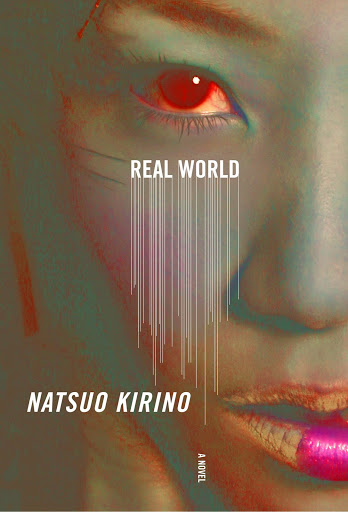
Where: Japan
Turn to: Real World by Natsuo Kirino
Why: Her unflinching depiction of five Tokyo teens unravels the truth about Japan’s youth—why they aren’t merely obsessed with cartoon characters and murder can seem like joyful escape.
 Where: Vietnam, Thailand, Mexico, Sicily
Turn to: The Size of the World
Why: Just because you’re not leaving familiar digs to shack up in a foreign country doesn’t mean reading about characters who do—uncovering an extraordinary impression of the world, religion, love and corporate culture—won’t be just as transformative.
 Where: North Africa, Europe and America
Turn to: Theft by N.S. Koenings
Why: These five entrancing stories leap across continents, collide with global cultures, and illuminate desires we all share, whether a Belgian socialite awakened by her American goddaughter, British medium haunted by an African ghost, or you—local girl with nose in a book.
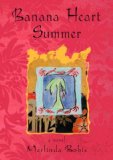
Where: Philippines
Turn to: Banana Heart Summer by Merlinda Bobis
Why: Spirited twelve-year-old Nenita will make you eat the heart of the matter, too, as she searches for love, life and opportunity in food, friends, her Nana’s stories, and more food.
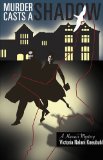 Where: 1930s Honolulu
Turn to: Murder Casts a Shadow: A Hawaiæi Mystery by Victoria Nalani Kneubuhl
Why: As fireworks crash into the sky during champagne-filled New Year’s celebrations, Bishop Museum’s portrait of King Kalakaua is stolen, its curator murdered, and a reporter and playwright sent to investigate—and you’ll beg to be along for the ride from the first intriguing and unconventional lines.

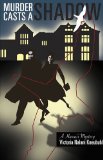 Honolulu playwright and writer Victoria Nalani Kneubuhl’s newest is not a script but a mystery novel set in 1930s Honolulu. Murder Casts a Shadow will have you hooked from the first smart, unconventional and intriguing pages.
Here’s a peek:
“PROLOGUE: New Year’s Eve, Honolulu, 1934
“From a bench in the garden, Mina Beckwith watched the clouds racing over the Ko`olau Mountains and the moon rising over Nu`uanu Valley. She took a deep breath and turned her attention to the party inside. Stone arches framed a patio with sets of open french doors leading into the spacious and elegant parlor. From the garden, the arches created small moving vignettes of dancing couples, laughing groups, floating balloons, flying confetti, and moving figures in stylish and fanciful costumes. Beautiful as it looked, Mina couldn’t bring herself to go back in. She’d kept her mask in place all night, avoiding recognition and interaction. It would take more than fancy dress, she thought, to disguise the same old crowd and the same old small talk.”
–From Murder Casts a Shadow by Victoria Nalani Kneubuhl
University of Hawaii Press

 Tokyo teenagers’ worlds collide
By Christine Thomas
Published 7/20 in the Honolulu Advertiser
Real World
By Natsuo Kirino
Translated by Phillip Gabriel
Knopf; 204 pages; $22.95Entering the dark, fictional worlds of Japanese noir writer Natsuo Kirino demands total submission to her characters’ inner lives, and her latest novel’s characteristically unflinching study of five suburban Tokyo teens is no exception. Set against the perfectly benign backdrop of a smoggy, mundane summer dedicated to college “cram school” sessions, “Real World” presents a seemingly ordinary cast of characters only to quickly unravel this facade through each teen’s disturbingly intimate, revolving first-person narrations.
Within, the materialistic world of Japanese society is painted as a “fake” and the novel’s teens yearn for a life where they are not constantly “assaulted by commercialism,” and no longer feel “different from our parents, a completely different species from our teachers” and “in a different world altogether.” So in order to keep up appearances they present false personas, from disguises to fake names, to protect their true desires and feelings.
The strongest and most likeable character Toshi arms herself with the name Ninna Hori, and camouflages herself by simply trying “to wear ordinary clothes and not stand out.” In her inner circle of friends are Kirarin, who acts innocent and pure but secretly role plays in chat rooms and fools around with men; Teraruchi who cleverly hides her feelings and never exposes her real self; and Yuzan who acts mannish to conceal her sexuality. All this fakery keeps them, as Kirarin notes, “running back and forth between desire and reality, tossed about by life,” bereft of true identity.
The plot of this hardboiled story rises above predictable teenage angst through its brutal catalyst—the murder of Toshi’s neighbor, a woman memorable only by her red lipstick. Toshi suspects the culprit to be the neighbor’s strange young son, a model student at Tokyo’s prestigious high school and a peeping Tom. Instead of being repelled by his deed, each girl is awed—not the act itself but his courage to act out their shared, veiled longing to escape. And when the boy—whom Toshi and her friends call Worm—vanishes with Toshi’s cell phone, one by one the girls are enticed into the boy’s discrete, movie-like reality, unable to resist the desire for “a taste of adventure.”
Rather than crafting a simply crime novel or painting a grotesque portrait of people ruled by perverse desires and criminal hearts, Kirino’s narrative challenges readers to confront the truth of human nature, to release judgments about violence and see beyond the act to its roots—in this case, each teen’s intense suffering, whether from excessive parental expectations, emotional betrayals, or sexual confusion and objectification. For the teens become accomplices and lie about Worm’s whereabouts not to protect him, but themselves: “[They lie] to protect the truth about how all of us felt when we first heard about Worm. Or to protect what Worm felt in the instant he murdered his mother. Because it was something no one else could know.”
Together they speak as one voice revealing the secrets of youth in an utterly hypnotic, illuminating narrative that exposes the dangerous gap between parents’ and children’s worlds. Only a novel, and only Kirino can “show you the real world with one layer peeled away, a reality you can’t otherwise see.”

 From the first page of Seth Greenland’s new novel Shining City,
I recommended it in a recent Lei Chic feature.
Who’s Your Daddy?
By Christine Thomas
Published July 9, 2008 in Lei Chic
Should I have children, or travel? Pursue my dreams or get a job with benefits? Go to the denim sale or pay my electric bill?Such pressing life questions seem simple compared to the quandary of middle-aged everyman Marcus Ripps, protagonist of Seth Greenland’s hilarious new satirical novel “Shining City.” After losing his factory job to China, Marcus faces defaulting on his L.A. home and living a sexless marriage, until his estranged brother bequeaths him an eponymous dry cleaning business. But this solution is quickly soiled when he learns the only thing being laundered there is money earned by a suite of prostitutes.
So, what to do but rationally consider the irrational—becoming a pimp. After all, then Marcus could pay off his mortgage, afford his son’s over-the-top bar mitzvah, rescue his wife’s business, and buy his medical marijuana-smoking mother-in-law health insurance. And if he’s a good provider and boss, offering 401Ks and health care to his ladies, is he really a criminal?
Greenland’s exacting characterization and pithy descriptions cleverly position this ludicrous plot somewhere between a laugh-out-loud farce and an illuminating portrait of modern society’s moral ironies and unbelievable dilemmas.
The perfect novel in a time when To pimp or not to pimp? is everybody’s real-life question.
Available online at amazon.com or your local bookseller.

 Honolulu Stories: Two Centuries of Writing
Edited by Gavan Daws and Bennett Hymer
Mutual; 1117 pages; $35
Reviewed by Christine Thomas
Published 6/22 in the Honolulu AdvertiserHad “Honolulu Stories” editors Gavan Daws and Bennet Hymer included the full text of each story included in this mammoth, 1000 plus-page collection of Honolulu portraits from the nineteenth century to the present, it would be even more intimidating to crack open.
But apart from its girth, this first-of-its-kind anthology is undeniably impressive in its ambitious, democratic range and focus on “imaginative writing, not nonfiction.” And with nearly 250 contributors and 350 entries—by unknown to local favorites to famous voices—nine translated languages, and sweeping categories such as The Plantation, On the Beach at Waikiki, and To Be Hawaiian, the poetry, lyrics, chants, fiction, comedy, and plays within offer a truly comprehensive canvas.
There are expected inclusions, such as Queen Lili`uokalani’s prayer and excerpts from London and Bushnell; local fixtures like Lois Ann Yamanaka, and Ian MacMillan; as well as unexpected mainland voices like Hunter S. Thompson’s “The Curse of Lono” and National Book Award winner Denis Johnson’s “Tree of Smoke.”
But it’s classic icons like Kapono Beamer’s “Mr Sun Cho Lee,” Rap Reiplinger’s “Room Service,” and Jerry Santos’ “Ku`u Home O Kahalu`u” that ground the collection in the meaningful and authentic, elevating it to a treasured household reference that reveals today’s Honolulu as “a literary city of its own making.”

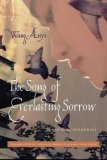 The last of the Chicago five reviews, a mesmerizing tale of life by Wang Anyi.
The Song of Everlasting Sorrow
By Wang Anyi
Translated by Michael Berry and Susan Chan Egan
Columbia; 440 pages; $29.95Without delving into historical and political intricacies, Wang Anyi’s novel “The Song of Everlasting Sorrow
” tells a story of post-World War II Shanghai by first laying out the city in laborious detail—painstakingly recording the labyrinthine longtang, or townhouse, residential neighborhoods, the pigeons, the pervasive current of gossip and seemingly every breeze of working-class life—like a camera slowly focusing its lens.
Wang’s Anyi’s exacting narration eventually settles on a central character, Wang Qiyao—an pretty but not gorgeous, unsympathetic but not distasteful woman who nonetheless inspires worship in friends and men, and earns her third place in the Miss Shanghai competition. She is deliberately positioned as a quintessential stand-in for all women: “Behind every doorway in the Shanghai longtang a Wang Qiyao is studying, embroidering, whispering secrets.”
Throughout the novel’s crucial span from 1946-1986, Wang Qiyao’s nostalgia recreates her past in every era and chapter. Friends and paramours exit swiftly and with little mention, quickly replaced by new ones; history lies in the background, evidenced only through wardrobe changes and changing food and currency availability—and thus Wang Anyi subtly yet pointedly reveals life’s repetitive nature.
Like Wang Qiyao, the novel is alternately appealing and tedious. It has a plot but is not plot-driven, and is a life portrait meant to stand for all lives. The hypnotic prose and melancholic story leave readers with the sense of walking slowly on a mesmerizing treadmill, as if the act of reading also makes them, alongside the characters, “part of a cycle that has been renewing itself since time immemorial.”

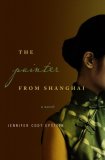 The fourth of five of my Chicago Tribune reviews (published 6/21), a true story about post-impressionist painter Pan Yuliang brought gloriously to life in Jennifer Cody Epstein’s impressive debut novel.
The Painter from Shanghai
By Jennifer Cody Epstein
W.W. Norton; 416 pages; $24.95What is known about the life of 20th Century Shanghai painter Pan Yuliang seems the stuff of fiction—her opium-addicted uncle sold her to a brothel at age 14; Pan Zanhua, a progressive customs official paid her debt and made her his second wife; she studied art in Paris and Rome, and became a famous Post-Impressionist painter until her controversial nudes forced her to abandon China for good.
It’s therefore unsurprising that the plot of Jennifer Cody Epstein’s debut novel about Yuliang’s life, “The Painter from Shanghai,” is utterly engrossing. But Epstein’s spotless pace, vivid characterization, and often breathtaking descriptions elevate the novel above any initial similarities with Memoirs of a Geisha to become its own distinctive canvas.
Yuliang’s strength and vulnerability, her believable growth throughout the novel into a daring, independent woman and the development of her artist’s eye are wholly absorbing, and Pan Zanhua’s support of Yuliang—even helping her unbind her feet—is charming and seductive. And Epstein’s exploration of their romance hits just the right note, tender but never maudlin, clearly painting their love just as Yuliang describes it: “a little like the need for air…You aren’t aware of it until the air is removed. And suddenly, you realize you are suffocating.”
The book’s intimacy is spellbinding, not because of the romance of the courtesan era when Yuliang “feels like a peach without its skin” but because of Epstein’s true achievement in resurrecting such a passionate woman who pursued a life of her own despite intrinsic barriers. Much like Pan Yuliang’s inspiring defiance of fate, Epstein’s assured, impeccable narrative transcends all expectation.

 It turns out only 3 of my 5 Chicago book reviews could be published due to space issues, so I’ll have to save those for next week.
Instead, here’s what I wrote about Jessica Brody’s sensational (in the truest sense of the word) debut novel The Fidelity Files
I generally agreed with the AP reviewer’s (Read the AP review here) assessment that Brody is prone to overwriting, describing at length how a Treo works (who doesn’t know about phones that are organizers and emailers?) and her history with pens and pencils. Brody really deserved better editing assistance, but her swift plot and seductive premise overcame these longueurs, and I’m sure the film version will edit these out.
That’s why I recommend the book in my article, below.
My Hero
June 10, 2008
Published in Lei ChicIn this episode of Kikaida, (cue soundtrack: Jiro…changeee…Kikaida) the human-like Jiro transforms into his powerful alter ego Kikaida to fight for justice and battle another of evil Professor Gil’s surprisingly similar-looking minions.
Fast-forward from the ‘70s though, and 2008 needs a new idol. Like beautiful but chronically single Jennifer Hunter who secretly becomes Ashlyn, a fidelity inspector battling cheating men who all look alike on the inside—unfaithful. In Jessica Brody’s debut novel “The Fidelity Files” Ashlyn morphs into each man’s fantasy—whether football-mad flight attendant, savvy poker player, or naïve business traveler. Then she tests them for the intention to cheat, ensuring that her client’s mate does all the propositioning until it’s clear he would’ve had sex with her, but escapes before things go all the way.
The plot remains irresistible as a succession of men fail (frighteningly common) or pass (dumbfoundingly rare), and the titillating tension only increases as Jennifer struggles to keep her identity a secret from friends and the world, and somehow finds time to fall in love.
That is, until one last assignment (Jennifer…changeee…Go, go go go!) alters her position on love and relationships for good.
It’s one superpower every girl wants.
And the superhero every modern girl needs.Available at amazon.com or your local bookseller.


 Literary Lotus