It’s your Monday morning moment of zen.

Beginning June 26, Mission Houses Museum will host Ho‘omaka Hou (New Beginning) Days on the last Saturday of every month. This new program is designed to explore literacy in Hawai‘i in a fun, hands-on way, exploring a different topic each time.
On June 26, the focus will be First Peoples, examining traditions of Hawai’i’s well, first peoples, through petroglyphs and other storytelling avenues. Story hour is at 12:30 and will be scheduled regularly at that time, and visitors can engage in rotating hands-on activities throughout the day. Above all, the museum wants to engage people and reflect on the idea of new beginnings.
“Everyone who has ever been a newcomer to Hawai‘i has experienced a new beginning here, so this program will hold surprises and relevance to everyone in Hawai‘i. We or our ancestors have all come here from elsewhere,” said Tom Woods, Mission Houses Museum Executive Director.
July’s topic will be Yankees and Europeans Make Hawai’i Home, exploring how traders, sailors and missionaries integrated their traditions into Hawai’i’s culture through the items they brought and developed, such as ships, china, quilts, and handwritten Hawaiian language. (see the 2010 schedule below)
It’s great to see the Museum doing so many events and community activities, especially around literacy–reading and storytelling, after all, provide many new beginnings for adults and children alike.
Saturday, June 26, 10 am to 4 pm, children under 6 admitted free; $4 for kama‘aina, and $10 for non-residents; admission includes the house tour at 11am, 1pm or 2:45 pm, and all activities.
2010 Schedule
August 28: Plantation Days
September 25: Working Together
October 30: Chicken Skin Stories
November 27: A Time to Give Thanks and Mālama (care for) Our Land and Friends
December 18: A Circle of Ethnic Holidays
**Photo linked to the Mission Houses Library page–check it out!
I’ve never before heard of so many exciting reasons to visit the Bishop Museum. I dare you to not to mark at least one visit on your summer calendar.
“This exhibition brings together the last of the great carved Kū images from across the world,” said Timothy Johns, president and chief executive officer of Bishop Museum, during the media preview conference on June 3, 2010. “It has been a dream of people for many years.” The British Museum’s Keeper of the Department of Africa, Oceania and the Americas, Jonathan King stated, “This is a wonderful and exceptional project we hope will be the first of many with the Bishop Museum and native Hawaiians,” then went on to explain what they know about their image, which they think came to London during King Kalakaua’s 1820 visit. He also noted that all of their mouths are carved very similarly, and generally exhibit such confident stokes even though the tools were likely not in use very long.
3) And on June 19th, the Museum launched a new exhibit of historic surfboards and surfing images culled from their collection of historic Hawai’i photos–the largest such archive around.
SURFING: Featuring the Historic Surfboards in Bishop Museum’s Collection runs through September 6, 2010, and features such highlights as more than 25 historic surfboards (including some once belonging to ali’i), a surf simulator so visitors can try surfing right in the museum halls, examples of board design through modern times, and historic photos like this one from the archives.
“Surfing is worldwide, but its roots are in Hawai‘i. From its island home, the sport has spread internationally in the last one hundred years. As surfing has grown so has the interest in its history,” said Library and Archives Collection Manager DeSoto Brown.
Go, visit, learn–then tell me what you think.

Darien Hsu Gee was seven months pregnant when she and her husband left their Price Waterhouse jobs in San Francisco and moved to the Big Island.
“It was a big, last-minute, spur-of-the-moment idea,” the ever-energetic and passionate Darien says. “We really felt called there and felt it was home for us.”
Turns out it’s the perfect spot—just ten years on, she’s an organized mother of three who home-schools her children, and having pursued her longstanding passion for writing, is a national bestselling author of four novels penned under the name ‘Mia King’.
“Life pushed us in the direction we needed to go,” Darien says, and she has siphoned her experiences into each book, including her most recent, Table Manners (out in paperback August 4), inventing creative female protagonists on the brink of big change, and plots revolving around food—complete with delectable recipes.
Her next book Friendship Bread will be published by Ballantine in 2011, possibly under her
real name because of its markedly different focus on a town emerging from tragedy, but Darien still aims to entertain readers and inspire them to keep growing and chasing dreams.
“Don’t let people tell you what you can or can’t do—do what you want to do,” Darien advises.
“I’ve been writing since I was seven—it was only a matter of time before I trusted myself to do what I’m doing now.”
-By Christine Thomas
Extras:
Need a new writing book? Here’s one Darien recommends: Scene and Structure by Jack M. Bickham
Follow Darien on Twitter @miaking
This Sunday, June 13, I recommend visiting Na Mea Hawai’i: Native Books to hear a talk and readings from the 2010 Ka Palapala Po’okela Award-winning book Talking Hawaii’s Story.
Read more of my November 2009 review here.
The author is a deft storyteller and not afraid to provide candid descriptions of her life.
It may be impossible to pick up Jillian Lauren’s new book and not do the proverbial double take: Is this really a true story? Some Girls: My Life in a Harem is indeed a true-life memoir—corroborated with photographs and documents—detailing eighteen months Lauren resided in the harem of Prince Jefri Bolkiah (the Sultan of Brunei’s youngest brother) between age eighteen and twenty. Lauren flaunts considerable creative writing muscle (gained during her MFA from Antioch University) to deliver a tight, sleek narrative standing firmly on Lauren’s deftness as a wordsmith and storyteller, and a titillating tale bound to leave readers desiring more.
Sure—much of the story will, to some, merely seem scabrous. Lauren doesn’t shy from laying out her start as a stripper and quick transition to hired escort, including candid descriptions of sexual encounters. She doesn’t camouflage flaws such as flightiness and stubborn avoidance of hard work. After all, the promise of being paid 20 thousand dollars for spicing up a Singaporean businessman’s parties is enough to get her on the plane, and when it’s revealed the destination is actually Borneo, Lauren doesn’t bat an eye, the money all that matters. It is only when she realizes the parties aren’t just parties that things heat up: “Why hadn’t I realized it before? We were neither party guests nor prostitutes. We were harem girls.”
Shunt aside judgments or Puritanical shock at her questionable choices, however, and what is astounding is that Lauren writes without an ounce of shame, confronting every hard truth. She freely admits her confidence as a sex worker: “I had been a good stripper—a natural, everyone always told me.” And today she appears a natural at writing—astute observations ringing with emotional and factual truth (they’re based on her journal entries)—buoyed by her perspicacious past and loving new family (husband and Weezer bass player Scott Shriner, and an adopted son).
But she wasn’t always this grounded, and Some Girls is, as intended, more about Lauren’s struggle to love and find herself than about sex. Okay—it’s also about sex. You can’t write about a modern-day harem and not expect readers to skip well-placed flashback scenes—drawing astute parallels between Lauren’s harem experiences and those growing up in New Jersey—for promised revelations of the Prince’s venery. And though they add depth and insight, Lauren smartly keeps digressions limited and doesn’t delay juicy details for long.
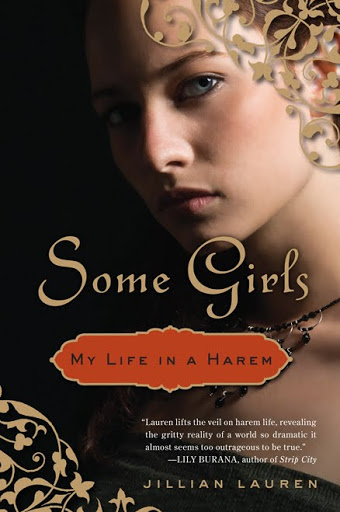
Lauren was one of the first Westerners to access the Prince’s (they call him Robin) hedonistic playroom, and the intricacies of this ancient but enduring practice are enthralling. Each night, Lauren and a roomful of women of all ages and nationalities await Robin’s arrival, are asked to sing karaoke, retire to a bedroom, or sit next to him in the favored chair.
One of the book’s most fascinating facets is the fierce and complex competition to stay on top and win the spot of Robin’s fourth wife. “The parties were a petri dish,” Lauren explains, “ideal conditions to breed fierce intimacies and fiercer resentments,” which was perhaps what the bored Robin loved most. Despite struggling with weight and self-esteem, Lauren becomes a star student of harem etiquette and strategy, quickly becoming one of Robin’s favorite girlfriends, instantly drunk on the position’s power, jewels and cash.
This may all sound quasi-romantic, but Lauren unapologetically explains that she was really a quasi-prostitute, locked up under 24-hour surveillance at Robin’s beck and call until she asked to go home. But the seduction was nearly inescapable: “Part of it was treacherous and terrible,” say says, “but part of it wasn’t so bad, this world of women with one enigma of a man who held sway over us all.”
Eventually, Lauren stopped objectifying herself, and sought a path she could walk confidently on her own. And in the post-harem, New York life she encapsulates, she’s transformed into the Scheherazade she likens herself to (along with Patti Smith)—enchanting with her life story with another in the wings, a novel, Pretty, to be released next year. Until then, many will delight in re-reading Some Girls, because it’s too good to read just once.
Read a shorter version at the Miami Herald, published 6.6.10
C.T.: Like Dickens your books have multilayered characters, but are still focused on telling a good story. Why is that so important?
It’s no wonder he has soared in parallel careers since publishing One L, about his first year in Harvard Law School, in 1977, and his breakout novel, Presumed Innocent, which marked him as a genre-busting, literary legal thriller writer, in 1987. Eight other books and more than twenty years later, Turow has come back to the beginning. His new novel Innocent—the first full-length one in five years—resurrects Presumed Innocent’s Judge Rusty Sabich, now a bit older and once again at odds with adversary Tommy Molto after the enigmatic death of Sabich’s wife.
A return to the Presumed Innocent landscape gave Turow the opportunity to revisit what he admits is an alter ego of sorts. “I wanted to be with Rusty again, I really did—this flawed sensitive smart guy who I really seemed to understand,” he says. “He’s different from me in lots of ways. He’s a judge and I’m not; he grew up in a working class family and I didn’t; and he was a creature of the state criminal justice system while I came out of the federal system. He’s a quiet and more aloof guy that I am. But I share many of his failings and some of his strengths.”
Even though Innocent can function as a sequel, Turow was conscious not to imitate its predecessor. He sets it apart from the opening with a first-person narration, not by Sabich, but by his son—one that also offers a chilling glimpse of the novel’s thematic exploration of change, love and loyalty—then rotates through multiple viewpoints of Sabich, Molto and an important female character. But because Turow writes his way through stories rather than thinking them out beforehand, he wasn’t always sure how Innocent would be structured. “You put your heart and your hands out in front of you and see what happens,” he explains.
Like his other books, Innocent started out with an isolated event, this time written on a Post-it note. “At some point I had jotted just a little idea for a scene—a man is sitting on a bed in which the dead body of a woman lies,” he says.
Then, while writing the serialized novella Limitations for The New York Times, he felt called back to Sabich. “I turned around and saw the note on my desk and realized Rusty Sabich was the man sitting on the bed. Then I was really off to the races.”
Turow writes at home in the mornings and on the train while heading to work, where he often devotes time to pro bono cases he takes on as a matter of principle and values—a way to share some of his good fortune with the underrepresented and disadvantaged. “I’m lucky that I’ve had a pretty long highlight reel, certainly as a lawyer,” says Turow, citing a complex capital punishment case as one of his most remarkable. (Known as the Alex Hernandez case, it was described in Ultimate Punishment.) “And obviously as a novelist I’ve had a good role of the dice.”
Though he has scaled back his legal duties to make room for his now primary role as a writer, he still feels engaged when practicing law. “It enables you to do a lot of different things,” says the sharp and erudite Turow, who doesn’t seem to stay still for long. “Whatever happens, by the time Innocent comes out I intend to be enmeshed in something else. That’s the best antidote to the ups and downs of publication.”
Whether that’s the comic thriller idea he’s been pushing around or that play he’s always wanted to write, it’s certain his next creative endeavor will be surprising.
“People don’t want to read about the humdrum and ordinary—they live the humdrum and the ordinary,” says Turow. “I want to write about change.”
By CHRISTINE THOMAS
Originally Published in May’s CC Magazine
